- Exo 1:1-6:1
- Is 27:6-28:13
- 1Co 14:13-25
Sh’mot means “names.”
| Shemoth (Exodus) 1:1-6:1 |
Shemoth (Exodus) Chapter 1
The Yasharalites Increase Greatly in Mitsrayim (Genesis 46:7–27)
1These are the names of the sons of Yasharal who went to Mitsrayim with Ya‛aqoḇ, each with his family:
2 Re’uḇěn, Shim‛on, Luiy, and Yehuḏah;
3 Yissasḵar, Zeḇulun, and Binyamin;
4 Dan and Naphtali;
Gaḏ and Ashěr..
5 The descendants of Ya‛aqoḇ numbered seventy in all, including Yosěph, who was already in Mitsrayim.
6 Now Yosěph and all his brothers and all that generation died, 7 but the Yasharalites were fruitful and increased rapidly; they multiplied and became exceedingly numerous, so that the land was filled with them.
Oppression by a New Pharaoh (Acts 7:15–19)
8 Then a new sovereign, who did not know Yosěph, came to power in Mitsrayim. 9 “Look,” he said to his people, “the Yasharalites have become too numerous and too powerful for us. 10 Come, let us deal shrewdly with them, or they will increase even more; and if a war breaks out, they may join our enemies, fight against us, and leave the country.”
11 So they appointed slave-masters over the Yasharalites to oppress them with forced labor. As a result, they built Pithom and Ra‛amses as store cities for Pharaoh. 12 But the more they were oppressed, the more they multiplied and flourished; so the Egyptians came to dread the Yasharalites.
13 They worked the Yasharalites ruthlessly 14 and made their lives bitter with hard labor in brick and mortar, and with all kinds of work in the fields. Every service they imposed was harsh.
15 Then the sovereign of Mitsrayim said to the Hebrew midwives, whose names were Shiphrah and Pu’ah, 16 “When you help the Hebrew women give birth, observe them on the birthstools. If the child is a son, kill him; but if it is a daughter, let her live.”
17 The midwives, however, feared Alahym and did not do as the sovereign of Mitsrayim had instructed; they let the boys live. 18 So the sovereign of Mitsrayim summoned the midwives and asked them, “Why have you done this? Why have you let the boys live?”
19 The midwives answered Pharaoh, “The Hebrew women are not like the Mitsrian women, for they are vigorous and give birth before a midwife arrives.”
20 So Alahym was good to the midwives, and the people multiplied and became even more numerous. 21 And because the midwives feared Alahym, He gave them families of their own.
22 Then Pharaoh commanded all his people: “Every son born to the Hebrews you must throw into the Nile, but every daughter you may allow to live.”
Shemoth (Exodus) Chapter 2
The Birth and Adoption of Moshe (Acts 7:20–22 ; Hebrews 11:23)
1Now a man of the house of Luiy married a Luiyite woman, 2 and she conceived and gave birth to a son. When she saw that he was a beautiful child, she hid him for three months.
3 But when she could no longer hide him, she got him a papyrus basket and coated it with tar and pitch. Then she placed the child in the basket and set it among the reeds along the bank of the Nile. 4 And his sister stood at a distance to see what would happen to him.
5 Soon the daughter of Pharaoh went down to bathe in the Nile, and her attendants were walking along the riverbank. And when she saw the basket among the reeds, she sent her maidservant to retrieve it. 6 When she opened it, she saw the child, and behold, the little boy was crying. So she had compassion on him and said, “This is one of the Hebrew children.”
7 Then his sister said to Pharaoh’s daughter, “Shall I go and call one of the Hebrew women to nurse the child for you?”
8 “Go ahead,” Pharaoh’s daughter told her. And the girl went and called the boy’s mother.
9 Pharaoh’s daughter said to her, “Take this child and nurse him for me, and I will pay your wages.” So the woman took the boy and nursed him.
10 When the child had grown older, she brought him to Pharaoh’s daughter, and he became her son. She named him Moshe and explained, “I drew him out of the water.”
The Rejection and Flight of Moshe (Acts 7:23–29)
11 One day, after Moshe had grown up, he went out to his own people and observed their hard labor. He saw a Mitsrian beating a Hebrew, one of his own people. 12 After looking this way and that and seeing no one, he struck down the Mitsrian and hid his body in the sand.
13 The next day Moshe went out and saw two Hebrews fighting. He asked the one in the wrong, “Why are you attacking your companion?”
14 But the man replied, “Who made you ruler and judge over us? Are you planning to kill me as you killed the Mitsrian? ”
Then Moshe was afraid and thought, “This thing I have done has surely become known.”
15 When Pharaoh heard about this matter, he sought to kill Moshe. But Moshe fled from Pharaoh and settled in the land of Midian, where he sat down beside a well.
16 Now the priest of Midian had seven daughters, and they came to draw water and fill the troughs to water their father’s flock. 17 And when some shepherds came along and drove them away, Moshe rose up to help them and watered their flock.
18 When the daughters returned to their father Reuel, he asked them, “Why have you returned so early today?”
19 “A Mitsrian rescued us from the shepherds,” they replied. “He even drew water for us and watered the flock.”
20 “So where is he?” their father asked. “Why did you leave the man behind? Invite him to have something to eat.”
21 Moshe agreed to stay with the man, and he gave his daughter Tsipporah to Moshe in marriage. 22 And she gave birth to a son, and Moshe named him Gěreshom, saying, “I have become a sojourner in a foreign land.”
Alahym Hears the Cry of the Yasharalites
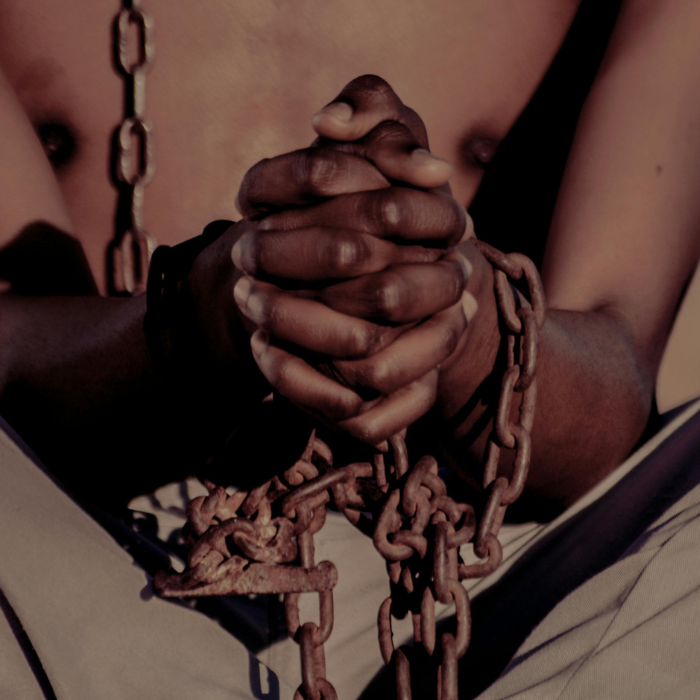
23 After a long time, the sovereign of Mitsrayim died. The Yasharalites groaned and cried out under their burden of slavery, and their cry for deliverance from bondage ascended to Alahym.
24 So Alahym heard their groaning, and He remembered His covenant with Aḇraham, Yitsḥaq, and Ya‛aqoḇ. 25 Alahym saw the Yasharalites and took notice.
Shemoth (Exodus) Chapter 3
Moshe at the Burning Bush (Acts 7:30–38)
1Meanwhile, Moshe was shepherding the flock of his father-in-law Yithro, the priest of Miḏyan. He led the flock to the far side of the wilderness and came to Ḥorěḇ, the mountain of Alahym. 2 There the Messenger of 𐤉𐤄𐤅𐤄 appeared to him in a blazing fire from within a bush. Moshe saw the bush ablaze with fire, but it was not consumed. 3 So Moshe thought, “I must go over and see this marvelous sight. Why is the bush not burning up?”
4 When 𐤉𐤄𐤅𐤄 saw that he had gone over to look, Alahym called out to him from within the bush, “Moshe, Moshe!”
“Here I am,” he answered.
5 “Do not come any closer,” Alahym said. “Take off your sandals, for the place where you are standing is set-apart ground.” 6 Then He said, “I am the Alahym of your father, the Alahym of Aḇraham, the Alahym of Yitsḥaq, and the Alahym of Ya‛aqoḇ.”
At this, Moshe hid his face, for he was afraid to look at Alahym.
7 𐤉𐤄𐤅𐤄 said, “I have indeed seen the affliction of My people in Mitsrayim. I have heard them crying out because of their oppressors, and I am aware of their sufferings. 8 I have come down to rescue them from the hand of the Egyptians and to bring them up out of that land to a good and spacious land, a land flowing with milk and honey—the home of the Kena‛anites and the Ḥittites and the Amorites and the Perizzites and the Ḥiwwites and the Yeḇusites.
9 And now the cry of the Yasharalites has reached Me, and I have seen how severely the Mitsrites are oppressing them. 10 Therefore, go! I am sending you to Pharaoh to bring My people the Yasharalites out of Mitsrayim.”
11 But Moshe asked Alahym, “Who am I, that I should go to Pharaoh and bring the Yasharalites out of Mitsrayim?”
12 “I will surely be with you,” Alahym said, “and this will be the sign to you that I have sent you: When you have brought the people out of Mitsrayim, all of you will worship Alahym on this mountain.”
13 Then Moshe asked Alahym, “Suppose I go to the Yasharalites and say to them, ‘The Alahym of your fathers has sent me to you,’ and they ask me, ‘What is His name?’ What should I tell them?”
14 Alahym said to Moshe, “I AM WHO I AM. This is what you are to say to the Yasharalites: ‘I AM has sent me to you.’ ”
15 Alahym also told Moshe, “Say to the Yasharalites, ‘𐤉𐤄𐤅𐤄, the Alahym of your fathers—the Alahym of Aḇraham, the Alahym of Yitsḥaq, and the Alahym of Ya‛aqoḇ—has sent me to you.’ This is My name forever, and this is how I am to be remembered in every generation.
16 Go, assemble the elders of Yasharal and say to them, ‘𐤉𐤄𐤅𐤄, the Alahym of your fathers—the Alahym of Aḇraham, Yitsḥaq, and Ya‛aqoḇ—has appeared to me and said: I have surely attended to you and have seen what has been done to you in Mitsrayim. 17 And I have promised to bring you up out of your affliction in Mitsrayim, into the land of the Kena‛anites and the Ḥittites and the Amorites and the Perizzites and the Ḥiwwites and the Yeḇusites—a land flowing with milk and honey.’
18 The elders of Yasharal will listen to what you say, and you must go with them to the sovereign of Mitsrayim and tell him, ‘𐤉𐤄𐤅𐤄, the Alahym of the Hebrews, has met with us. Now please let us take a three-day journey into the wilderness, so that we may sacrifice to 𐤉𐤄𐤅𐤄 our Alahym.’
19 But I know that the sovereign of Mitsrayim will not allow you to go unless a mighty hand compels him. 20 So I will stretch out My hand and strike Mitsrayim with all the wonders I will perform among them. And after that, he will release you.
21 And I will grant this people such favor in the sight of Mitsrayim that when you leave, you will not go away empty-handed. 22 Every woman shall ask her neighbor and any woman staying in her house for silver and gold jewelry and clothing, and you will put them on your sons and daughters. So you will plunder the Egyptians.”
Shemoth (Exodus) Chapter 4
Moshe’s Staff
4Then Moshe answered, “What if they do not believe me or listen to my voice? For they may say, ‘𐤉𐤄𐤅𐤄 has not appeared to you.’ ”
2 And 𐤉𐤄𐤅𐤄 asked him, “What is that in your hand?”
“A staff,” he replied.
3 “Throw it on the ground,” said 𐤉𐤄𐤅𐤄. So Moshe threw it on the ground, and it became a snake, and he ran from it.
4 “Stretch out your hand and grab it by the tail,” 𐤉𐤄𐤅𐤄 said to Moshe, who reached out his hand and caught the snake, and it turned back into a staff in his hand. 5 “This is so that they may believe that 𐤉𐤄𐤅𐤄, the Alahym of their fathers—the Alahym of Aḇraham, the Alahym of Yitsḥaq, and the Alahym of Ya‛aqoḇ—has appeared to you.”
Moshe’s Hand
6 Furthermore, 𐤉𐤄𐤅𐤄 said to Moshe, “Put your hand inside your cloak.” So he put his hand inside his cloak, and when he took it out, his hand was leprous, white as snow.
7 “Put your hand back inside your cloak,” said 𐤉𐤄𐤅𐤄.
So Moshe put his hand back inside his cloak, and when he took it out, it was restored, like the rest of his skin.
8 And 𐤉𐤄𐤅𐤄 said, “If they refuse to believe you or heed the witness of the first sign, they may believe that of the second. 9 But if they do not believe even these two signs or listen to your voice, take some water from the Nile and pour it on the dry ground. Then the water you take from the Nile will become blood on the ground.”
The Appointment of Aharon
10 “Please, 𐤉𐤄𐤅𐤄,” Moshe replied to 𐤉𐤄𐤅𐤄, “I have never been eloquent, neither in the past nor since You have spoken to Your servant, for I am slow of speech and tongue.”
11 And 𐤉𐤄𐤅𐤄 said to him, “Who gave man his mouth? Or who makes the mute or the deaf, the sighted or the blind? Is it not I, 𐤉𐤄𐤅𐤄 – YAHUAH? 12 Now go! I will help you as you speak, and I will teach you what to say.”
13 But Moshe replied, “Please, 𐤉𐤄𐤅𐤄, send someone else.”
14 Then the anger of 𐤉𐤄𐤅𐤄 burned against Moshe, and He said, “Is not Aharon the Luiyite your brother? I know that he can speak well, and he is now on his way to meet you. When he sees you, he will be glad in his heart. 15 You are to speak to him and put the words in his mouth. I will help both of you to speak, and I will teach you what to do. 16 He will speak to the people for you. He will be your spokesman, and it will be as if you were Alahym to him. 17 But take this staff in your hand so you can perform signs with it.”
Moshe Leaves for Mitsrayim
18 Then Moshe went back to his father-in-law Yether and said to him, “Please let me return to my brothers in Mitsrayim to see if they are still alive.”
“Go in peace,” Yithro replied.
19 Now 𐤉𐤄𐤅𐤄 had said to Moshe in Miḏyan, “Go back to Mitsrayim, for all the men who sought to kill you are dead.” 20 So Moshe took his wife and sons, put them on a donkey, and headed back to Mitsrayim. And he took the staff of Alahym in his hand.
21 𐤉𐤄𐤅𐤄 instructed Moshe, “When you go back to Mitsrayim, see that you perform before Pharaoh all the wonders that I have put within your power. But I will harden his heart so that he will not let the people go.
22 Then tell Pharaoh that this is what 𐤉𐤄𐤅𐤄 says: ‘Yasharal is My firstborn son, 23 and I told you to let My son go so that he may worship Me. But since you have refused to let him go, behold, I will kill your firstborn son!’ ”
24 Now at a lodging place along the way, 𐤉𐤄𐤅𐤄 met Moshe and was about to kill him. 25 But Tsipporah took a flint knife, cut off her son’s foreskin, and touched it to Moshe’ feet. “Surely you are a bridegroom of blood to me,” she said.
26 So 𐤉𐤄𐤅𐤄 let him alone. (When she said, “bridegroom of blood,” she was referring to the circumcision.)
The People Believe Moshe and Aharon
27 Meanwhile, 𐤉𐤄𐤅𐤄 had said to Aharon, “Go and meet Moshe in the wilderness.” So he went and met Moshe at the mountain of Alahym and kissed him. 28 And Moshe told Aharon everything 𐤉𐤄𐤅𐤄 had sent him to say, and all the signs He had commanded him to perform.
29 Then Moshe and Aharon went and assembled all the elders of the Yasharalites, 30 and Aharon relayed everything 𐤉𐤄𐤅𐤄 had said to Moshe.
And Moshe performed the signs before the people, 31 and they believed. And when they heard that 𐤉𐤄𐤅𐤄 had attended to the Yasharalites and had seen their affliction, they bowed down and worshiped.
Shemoth (Exodus) Chapter 5
1After that, Moshe and Aharon went to Pharaoh and said, “This is what 𐤉𐤄𐤅𐤄, the Alahym of Yasharal, says: ‘Let My people go, so that they may hold a feast to Me in the wilderness.’ ”
2 But Pharaoh replied, “Who is 𐤉𐤄𐤅𐤄 that I should obey His voice and let Yasharal go? I do not know 𐤉𐤄𐤅𐤄, and I will not let Yasharal go.”
3 “The Alahym of the Hebrews has met with us,” they answered. “Please let us go on a three-day journey into the wilderness to sacrifice to 𐤉𐤄𐤅𐤄 our Alahym, or He may strike us with plagues or with the sword.”
4 But the sovereign of Mitsrayim said to them, “Moshe and Aharon, why do you draw the people away from their work? Get back to your labor!” 5 Pharaoh also said, “Look, the people of the land are now numerous, and you would be stopping them from their labor.”
Bricks and Straw
6 That same day Pharaoh commanded the slave-masters of the people and their foremen: 7 “You shall no longer supply the people with straw for making bricks. They must go and gather their own straw. 8 But require of them the same quota of bricks as before; do not reduce it. For they are lazy; that is why they are crying out, ‘Let us go and sacrifice to our Alahym.’ 9 Make the work harder on the men so they will be occupied and pay no attention to these lies.”
10 So the slave-masters and foremen of the people went out and said to them, “This is what Pharaoh says: ‘I am no longer giving you straw. 11 Go and get your own straw wherever you can find it; but your workload will in no way be reduced.’ ”
12 So the people scattered all over the land of Mitsrayim to gather stubble for straw. 13 The slave-masters kept pressing them, saying, “Fulfill your quota each day, just as you did when straw was provided.”
14 Then the Israelite foremen, whom Pharaoh’s slave-masters had set over the people, were beaten and asked, “Why have you not fulfilled your quota of bricks yesterday or today, as you did before?”
The Cry of the Yasharalites
15 So the Yasharalite foremen went and appealed to Pharaoh: “Why are you treating your servants this way? 16 No straw has been given to your servants, yet we are told, ‘Make bricks!’ Look, your servants are being beaten, but the fault is with your own people.”
17 “You are slackers!” Pharaoh replied. “Slackers! That is why you keep saying, ‘Let us go and sacrifice to 𐤉𐤄𐤅𐤄 – YAHUAH.’ 18 Now get to work. You will be given no straw, yet you must deliver the full quota of bricks.”
19 The Yasharalite foremen realized they were in trouble when they were told, “You must not reduce your daily quota of bricks.” 20 When they left Pharaoh, they confronted Moshe and Aharon, who stood waiting to meet them.
21 “May 𐤉𐤄𐤅𐤄 look upon you and judge you,” the foremen said, “for you have made us a stench before Pharaoh and his officials; you have placed in their hand a sword to kill us!”
22 So Moshe returned to 𐤉𐤄𐤅𐤄 and asked, “𐤉𐤄𐤅𐤄, why have You brought trouble upon this people? Is this why You sent me? 23 Ever since I went to Pharaoh to speak in Your name, he has brought trouble on this people, and You have not delivered Your people in any way.”
Shemoth (Exodus) Chapter 6
1But 𐤉𐤄𐤅𐤄 said to Moshe, “Now you will see what I will do to Pharaoh, for because of My mighty hand he will let the people go; because of My strong hand he will drive them out of his land.”
| Yeshayah (Isaiah) 27:6-28:13 |
Yeshayah (Isaiah) Chapter 27
The Redemption of Yasharal
6 In the days to come, Ya‛aqoḇ will take root.
Yasharal will bud and blossom
and fill the whole world with fruit.
7 Has 𐤉𐤄𐤅𐤄 struck Yasharal as He struck her oppressors?
Was she killed like those who slayed her?
8 By warfare and exile You contended with her
and removed her with a fierce wind,
as on the day the east wind blows.
9 Therefore Ya‛aqoḇ’s guilt will be atoned for,
and the full fruit of the removal of his sin will be this:
When he makes all the altar stones
like crushed bits of chalk,
no Asherah poles or incense altars
will remain standing.
10 For the fortified city lies deserted—
a homestead abandoned, a wilderness forsaken.
There the calves graze, and there they lie down;
they strip its branches bare.
11 When its limbs are dry,
they are broken off.
Women come and use them for kindling;
for this is a people without understanding.
Therefore, their Maker has no compassion on them,
and their Creator shows them no favor.
12 In that day 𐤉𐤄𐤅𐤄 will thresh from the flowing Euphrates to the Wadi of Mitsrayim, and you, O Yasharalites, will be gathered one by one. 13 And in that day a great ram’s horn will sound, and those who were perishing in Ashshur will come forth with those who were exiles in Mitsrayim. And they will worship 𐤉𐤄𐤅𐤄 on the set-apart mountain in Yarushalayim.
Yeshayah (Isaiah) Chapter 28
The Captivity of Ephrayim
1 Woe to the majestic crown of Ephrayim’s drunkards,
to the fading flower of his esteemed splendor,
set on the summit above the fertile valley,
the pride of those overcome by wine.
2 Behold, the Master has one
who is strong and mighty.
Like a hailstorm or destructive tempest,
like a driving rain or flooding downpour,
he will smash that crown to the ground.
3 The majestic crown of Ephrayim’s drunkards
will be trampled underfoot.
4 The fading flower of his beautiful splendor,
set on the summit above the fertile valley,
will be like a ripe fig before the summer harvest:
Whoever sees it will take it in his hand and swallow it.
5 On that day 𐤉𐤄𐤅𐤄 Tsebaot will be a crown of esteem,
a diadem of splendor to the remnant of His people,
6 a spirit of justice to him who sits in judgment,
and a strength to those who repel the onslaught at the gate.
7 These also stagger from wine
and stumble from strong drink:
Priests and prophets reel from strong drink
and are befuddled by wine.
They stumble because of strong drink,
muddled in their visions and stumbling in their judgments.
8 For all their tables are covered with vomit;
there is not a place without filth.
9 Whom is He trying to teach?
To whom is He explaining His message?
To infants just weaned from milk?
To babies removed from the breast?
10 For they hear:
“Order on order, order on order,
line on line, line on line;
a little here, a little there.”
11 Indeed, with mocking lips and foreign tongues,
He will speak to this people 12 to whom He has said:
“This is the place of rest, let the weary rest;
this is the place of repose.”
But they would not listen.
13 Then the word of 𐤉𐤄𐤅𐤄 to them will become:
“Order on order, order on order,
line on line, line on line;
a little here, a little there,”
so that they will go stumbling backward and will be injured, ensnared, and captured.
| Qorintiyim Aleph (1 Corinthians) 14:13-25 |
Prophecy and Tongues
Qorintiyim Aleph (1 Corinthians) Chapter 14
13Therefore, he who is speaking in a tongues, let him pray that he might interpret.
14For if I am praying in a tongue, my spirit is praying, but my understanding is without fruit.
15What then is it? I shall pray with the spirit, and I shall also pray with the understanding. I shall sing with the spirit, and I shall also sing with the understanding.
16Otherwise, if you bless with the spirit, how shall he who fills up the place of the unlearned say “Aman” at your giving of thanks, since he does not know what you say?
17For you truly give thanks well, but the other is not built up.
18I thank my Alahym I speak with tongues more than you all,
19 but in an assembly I wish to speak five words with my understanding that I might instruct others also, than ten thousand words in a tongue.
20Brothers, do not be children in your thinking, but in evil be babes, and in your thinking be perfect.
21 In the Torah it has been written, “With men of other tongues and other lips I shall speak to this people. And even so, they shall not hear Me, says 𐤉𐤄𐤅𐤄 [YAHUAH].”1
22So then tongues are for a sign, not to those who believe but to unbelievers, and prophesying is not for unbelievers but for those who believe.
23 If then all the assembly comes together in one place, and all speak with tongues, and there come in those who are unlearned or unbelievers, shall they not say that you are mad?
24But if all prophesy, and an unbeliever or an unlearned one comes in, he is reproved by all, he is discerned by all.
25And so the secrets of his heart are revealed. And so, falling down on his face, he shall worship Alahym, declaring that Alahym is truly among you.
- Isa_28:11 ↩︎