
- Mosheh 1 – B’reisheet (Genesis)
- Mosheh 2 – Sh’mot (Exodus)
- Mosheh 3 – Uayyiqra (Leviticus)
- Mosheh 4 – B’midbar (Numbers)
- Mosheh 5 – Deḇarim (Deuteronomy)
-
Parashah #25 Tzav – command
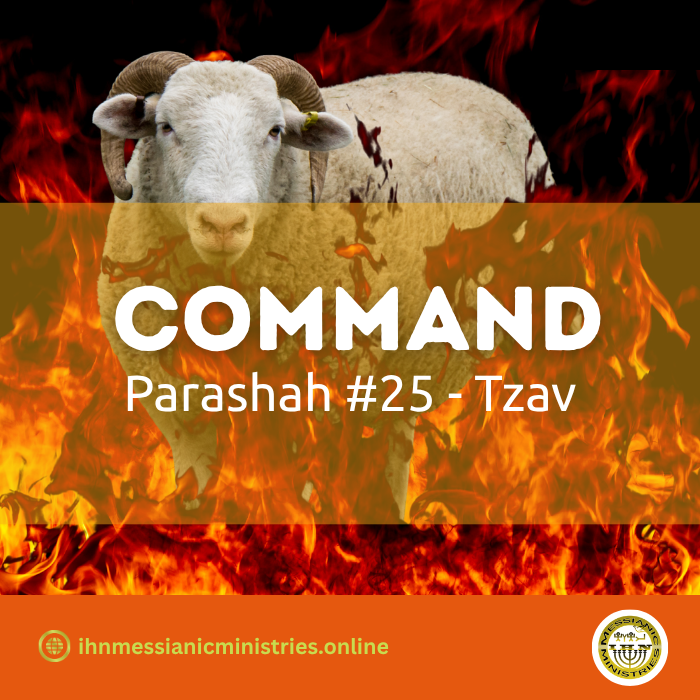
Tzav means “command.” Uayyiqra (Leviticus) 6:8 – 8:36 Uayyiqra (Leviticus) Chapter 6 The Burnt Offering (Leviticus 1:1–17) 8 Then 𐤉𐤄𐤅𐤄 said to Moshe, 9 “Command Aharon and his sons that this is the law of the burnt offering: The burnt offering is to remain on the hearth of the altar all night, until morning, and the fire must…
-
Parashah #26 Sh’mini – eighth
Sh’mini means “eighth.” Uayyiqra (Leviticus) 9:1-11:47 Uayyiqra (Leviticus) Chapter 9 𐤉𐤄𐤅𐤄 Accepts Aharon’s First Offerings 1And on the eighth day, Moshe summoned Aharon and his sons and the elders of Yasharal. 2 He said to Aharon, “Take for yourself a young bull for a sin offering and a ram for a burnt offering, both without blemish, and…
-
Parashah #27 Tazria – she bears seed
Tazria means “she bears seed.” Uayyiqra (Leviticus) 12:1-13:59 Uayyiqra (Leviticus) Chapter 12 Purification after Childbirth 1Then 𐤉𐤄𐤅𐤄 said to Moshe, 2 “Say to the Yasharalites, ‘A woman who becomes pregnant and gives birth to a son will be unclean for seven days, as she is during the days of her menstruation. 3 And on the eighth day…
-
Parashah #28 M’tzora – infected one
M’tzora means “infected one.” Uayyiqra (Leviticus) 14:1-15:33 Uayyiqra (Leviticus) Chapter 14 Cleansing from Skin Diseases (Matthew 8:1–4 ; Mark 1:40–45 ; Luke 5:12–16) 1Then 𐤉𐤄𐤅𐤄 said to Moshe, 2 “This is the law for the one afflicted with a skin disease on the day of his cleansing, when he is brought to the priest. 3 The priest is…
-
Parashah #29 Acharei Mot – after the death
Pcharei Mot means “after the death.” Uayyiqra (Leviticus) 16:1-18:30 Uayyiqra (Leviticus) Chapter 16 The Day of Atonement (Leviticus 23:26–32 ; Numbers 29:7–11) 1Now 𐤉𐤄𐤅𐤄 spoke to Moshe after the death of two of Aharon’s sons when they approached the presence of 𐤉𐤄𐤅𐤄- YAHUAH. 2 And 𐤉𐤄𐤅𐤄 said to Moshe: “Tell your brother Aharon not to…
-
Parashah #30 K’doshim Set-apart ones
K’doshim means “Set-apart ones.” Uayyiqra (Leviticus) 19:1-20:27 Uayyiqra (Leviticus) Chapter 19 Commandments for Set-Apartness 1Then 𐤉𐤄𐤅𐤄 said to Moshe, 2 “Speak to the whole congregation of Yasharal and tell them: Be set apart because I, 𐤉𐤄𐤅𐤄 your Alahym, am set apart. 3 Each of you must respect his mother and father, and you must keep My Sabbaths.…
Latest Posts
- Parashah #47 . R’eih – see
 R’eih means “see“ Deḇarim (Deuteronomy) 11:26-16:17 Deḇarim (Deuteronomy) Chapter 11… Read more: Parashah #47 . R’eih – see
 - Parashah #46 . Ekev – as a result
 Ekev means “as a result“ Deḇarim (Deuteronomy) 7:12-11:25 Deḇarim (Deuteronomy)… Read more: Parashah #46 . Ekev – as a result
 - Parashah #45. Ua–etchanan – and I pleaded
 Ua–etchanan means “and I pleaded“ Deḇarim (Deuteronomy) 3:23-7:11 Deḇarim (Deuteronomy)… Read more: Parashah #45. Ua–etchanan – and I pleaded