
-
Parashah #19 T’rumah – offering

T’rumah means “offering.” Shemoth (Exodus) 25:1-27:19 Offerings for the Dwelling Place (Exodus 35:4–9) Shemoth (Exodus) Chapter 25 1Then 𐤉𐤄𐤅𐤄 said to…
-
Parashah #20 T’tzaveh – you shall command
T’tzaveh means “you shall command.” Shemoth (Exodus) 27:20-30:10 Offerings for the Dwelling Place (Exodus 35:4–9) Shemoth (Exodus) Chapter 27 The Oil…
-
Parashah #21 Ki Tisa – when you elevate

Ki Tisa means “when you elevate“ Shemoth (Exodus) 30:11-34:35 Shemoth (Exodus) Chapter 30 The Census Offering (2 Samuel 24:1–9 ; 1…
-
Parashah #22 Vayakel – and he assembled

Vayakel means “and he assembled.” Shemoth (Exodus) 35:1-38:20 Shemoth (Exodus) Chapter 35 The Sabbath 1Then Moshe brought together the whole assembly…
-
Parashah #23 P’kudei – accountings of
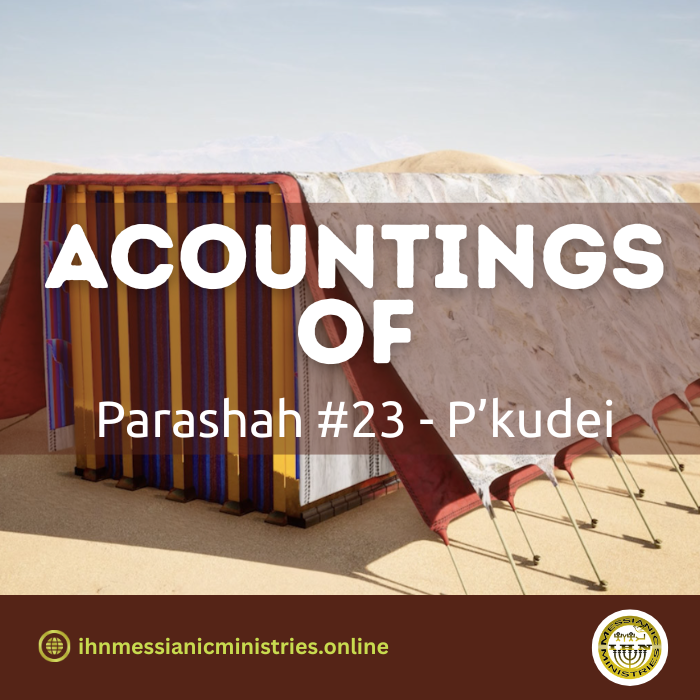
P’kudei means “accountings of.” Shemoth (Exodus) 38:21-40:38 Shemoth (Exodus) Chapter 38 An Inventory of Materials (Ezra 2:68–70 ; Nehemiah 7:70–73) 21 This…
Latest Posts
- Parashah #54 V’zot Ha’Bracha – And This the Blessing
 Deu 33:1-34:12; Jos 1:1-1:18(E); Jos 1:1-1:9(H); Rev 21:9-22:5
 - Parashah #53 Ha–azinu – Give Ear
 Deu 32:1-52; 2Sa 22:1-22:51; Rom 10:17-11:12; 12:19; 15:9-10
 - Parashah #52 Vayelech – And He Went
 Deu 31:1-30; Is 55:6-56:8; Rom 10:1-17